There's an old saying about camping that rings true for a lot of folks: roughing it means not having an extension cord long enough for your electric blanket. For anyone who's ever wanted to get out into nature without giving up the basics—running the air conditioner, cooking a proper meal, maybe streaming a ballgame—a California technology company thinks they've cracked the code.
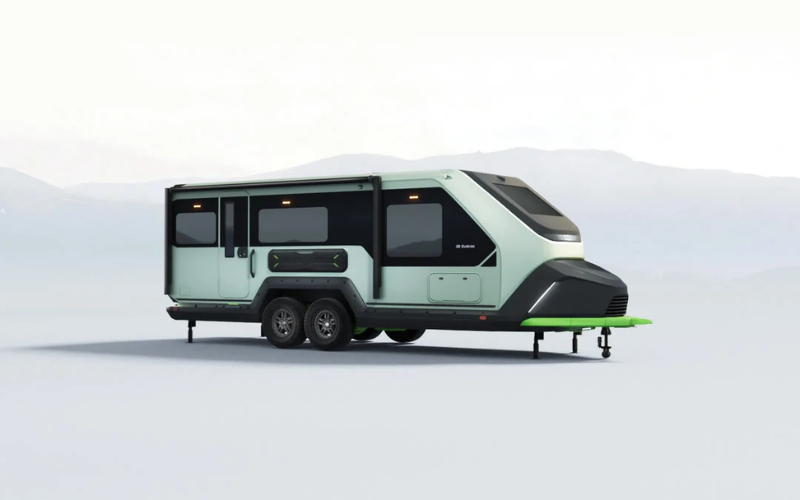
Evotrex, a tech firm based out of California, just pulled the curtain back on something they're calling the PG5 at the 2026 Consumer Electronics Show in Las Vegas this week. They're making a bold claim: it's the first recreational vehicle in the world that generates its own power.

Image credit: Evotrex
The concept is straightforward enough. Most RVs need to hook up to electrical service at campsites or run noisy generators that guzzle fuel. The PG5 ditches that dependency entirely. It combines multiple power sources working together—a substantial battery pack, solar panels, and an onboard gas-powered generator that functions more like a backup system than a primary power source.
According to Ivan Wang, who serves as Evotrex's chief marketing officer, the driving idea behind the vehicle goes beyond just convenience. "The vision is to create a future where humanity thrives in harmony with nature, and the mission is to transform that kind of outdoor experiences through technology and innovations," Wang explained in a recent interview. "It's one thing that we think it is universal, and that's people all like to have sufficient energy to power appliances and to enjoy comforts while camping outdoors."
The power setup is where things get interesting. At the heart of the system sits a 43 kilowatt-hour lithium iron phosphate battery—the same type of battery technology used in many electric vehicles because of its longevity and safety profile. Working alongside that is 1.5 kilowatts worth of solar panels and what Evotrex calls the Horizon, essentially a gas-powered generator that extends the range when battery power runs low.
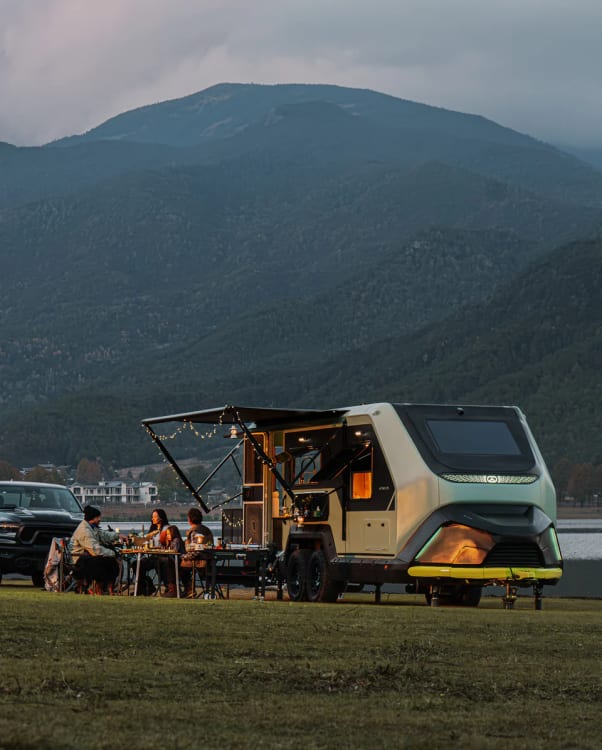
Image credit: Evotrex
All told, the combined system can deliver more than 270 kilowatt-hours of usable power in a single cycle. For context, the average American home uses about 30 kilowatt-hours per day. The PG5 can keep going through solar charging and even generates power while being towed down the highway through regenerative charging.
One feature that sets the PG5 apart from traditional travel trailers is its electric motor. The trailer essentially helps pull itself along. "The beauty of that is, first of all, our trailer is self-propelled, so it's got an electric motor in the high voltage battery pack," Wang noted. "So when you are towing it, it provides torque assist. So it doesn't matter whether you tow it with an EV pickup truck or you tow it with a traditional gas-powered truck, it gives you that extended range or improves your drive efficiency."
That self-propulsion does more than just ease the burden on whatever vehicle is doing the towing. It means better fuel economy for gas-powered trucks and extended range for electric pickups, which typically see their driving range cut dramatically when hauling heavy loads.
Evotrex developed a tool they're calling the Power Calculator to help buyers figure out exactly how long they can stay off the grid based on their usage patterns. Plug in the environmental conditions, what appliances you plan to run, and your preferences for comfort, and it spits out an estimate of how many days you can go without needing to hook up or refuel.
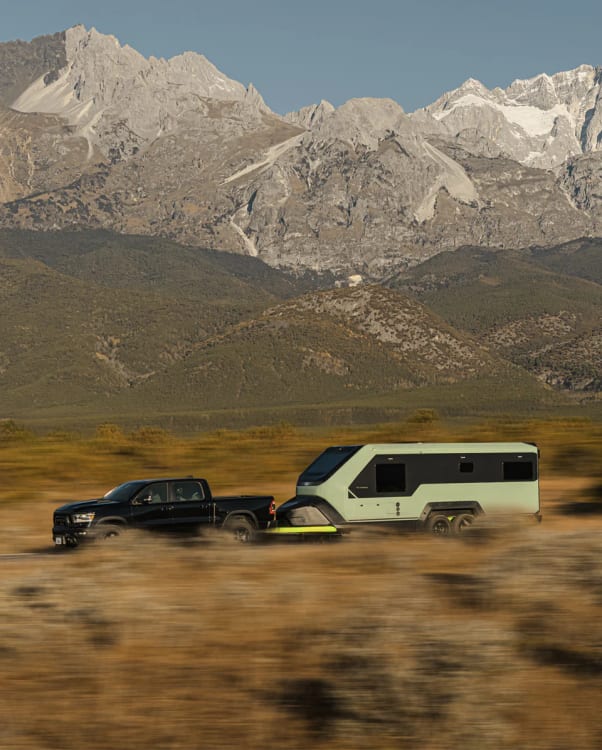
Image credit: Evotrex
The numbers are impressive if they hold up in real-world conditions. Wang says users can run the heating and cooling system continuously, just like at home, for three to four days straight. With more modest usage, that extends to a week or two weeks. "Then you can extend to up to seven days, 14 days, or even more, and as long as you have access to gas and water, then it's essentially unlimited," he added.
Beyond the power generation capabilities, Evotrex designed the PG5 to feel more like a small apartment than a cramped camper. There's a full-size queen bed, a convertible dining area that can sleep two more adults when needed, and a proper bathroom with a full shower and toilet—no composting toilets or outdoor shower bags required.
The kitchen setup includes a double-burner induction cooktop, a convection microwave, a range hood, and a full refrigerator. High-efficiency appliances throughout keep power consumption reasonable while still delivering the performance people expect at home. There's even a motorized patio deck that extends out from the side of the trailer.
When it's not on the road, the PG5 can serve double duty. It's equipped to work as a supercharger for electric vehicles and can supply power to a home either to avoid peak electricity rates or provide backup during outages. That kind of versatility gives it utility beyond just vacation trips.
The timing of the PG5's introduction comes as the recreational vehicle industry continues to ride a wave that started during the pandemic. When COVID-19 hit and traditional vacations became difficult or impossible, RV sales exploded. People wanted to travel but needed the safety and control that came with bringing their own accommodations.
Those sales numbers have held stronger than many expected. The RV Industry Association released its quarterly forecast predicting 2025 sales would land between 334,000 and 345,400 units. For this year, they're projecting shipments ranging from 332,100 to 366,000 units—a slight increase despite economic headwinds.
One interesting shift that emerged from the pandemic boom is who's buying RVs. Stella Qin, who co-founded Evotrex and heads up the company's United States operations, notes that younger buyers started showing up in numbers that surprised the industry. Traditionally, RV buyers skewed older, with the sweet spot running from the mid-fifties through retirement age. But millennials and younger Gen Xers discovered RVing during lockdowns and stuck with it.
Evotrex is banking on the PG5 appealing to that demographic shift. "A lot of younger people, not super young, but millennials and late millennials, when they think of an RV park, the hookups, they're probably shying away from that experience already," Qin said. "But what we want to bring into the table is draw their attention back to what could be in line with their perspective, they're connected. They have the glamping aspect of camping. They can still watch Netflix or even work or play."
That last point about working remotely isn't trivial. The rise of remote work means more people can take their jobs with them. Being able to park somewhere scenic and still have reliable internet, climate control, and all the power needed to run laptops and video calls makes the RV lifestyle viable in ways it wasn't before.
The PG5 comes in two versions. The base model, called the Pioneer, starts at $119,990. For those wanting all the bells and whistles, the fully loaded Atlas trim runs $159,990. Both are available for pre-order through Evotrex's website right now.
There's a catch, though. Production doesn't start until late this year, which means anyone ordering today is looking at roughly a year-long wait before taking delivery. Wang confirmed that timeline, so early adopters will need patience along with their deposit.
The price point puts the PG5 in the upper tier of the travel trailer market, though not outrageously so given what's included. High-end conventional travel trailers from established manufacturers can easily run $80,000 to $100,000 or more without any of the self-powering technology. The question is whether buyers will see enough value in the energy independence and tech features to justify the premium over traditional options.
For Evotrex, the PG5 represents a bet that the future of recreational vehicles lies in greater self-sufficiency and environmental consciousness. The ability to camp for extended periods without hookups or constantly running a loud generator opens up more remote locations and takes some of the logistics headache out of trip planning.
There's also the environmental angle. While the PG5 still has a gas-powered generator as part of its system, the heavy reliance on solar power and battery storage means significantly reduced emissions compared to conventional RVs that run generators for hours each day. For buyers who want to minimize their environmental impact without sacrificing comfort, that could be a selling point.
The RV industry has seen its share of innovations over the years, from slide-outs that dramatically increased interior space to luxury amenities that rival high-end apartments. But the core challenge of power management has remained largely unchanged. You either hook up at a campground, run a generator, or carefully ration battery power and propane.
If the PG5 delivers on its promises, it could represent a genuine shift in how people think about extended RV trips. The freedom to park anywhere for days or weeks at a time without worrying about electrical hookups or generator runtime opens up possibilities that simply don't exist with conventional rigs.
Of course, there's always a gap between what gets shown at trade shows and what performs in the real world. The PG5 won't start shipping for another year, so actual user experiences are still a ways off. Weather conditions, usage patterns, and manufacturing quality will all play roles in whether the vehicle lives up to its billing.
For now, though, anyone who's been sitting on the fence about getting into RVing because they didn't want to give up modern conveniences has a new option to consider. And those who've been extending extension cords across campsites for years might find the idea of true electrical independence pretty appealing.
The recreational vehicle market continues to evolve, driven by changing demographics, technology advances, and shifting ideas about what camping and travel should look like. Whether Evotrex's vision of self-powered, off-grid luxury catches on remains to be seen, but they're certainly making an interesting case for rethinking what's possible when you hit the road.


