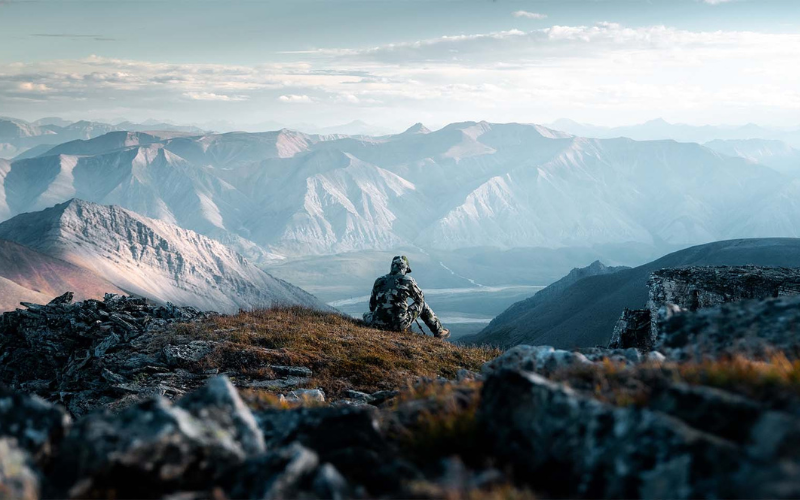
The hunting world got a jolt this month when news broke about the sale of Kuiu, that go-to brand for ultralight gear that's become a staple for serious backcountry hunters. At first glance, it looked like just another business deal in the outdoor industry— a California-based company getting snapped up by a group of investors. But then whispers started spreading online, tying one of the backers to a guy with a history of fighting against public access to rivers and streams. Suddenly, folks who live for chasing elk or mule deer on federal lands were asking: Could this mean trouble for the public hunting grounds we all depend on?
The announcement came on December 8 through a few press releases, including one from Cox Enterprises, a big Georgia outfit known more for cable TV and internet services than camo patterns. Cox was listed as one of the investors in the deal, but not the sole owner. The buyer was described as a group of "conservation-driven families and businesses," with Cox folding its stake into a new arm called Cox Outdoors. That division already includes Loop Tackle, a fishing gear company from Scandinavia that Cox picked up last year. Kuiu, founded 14 years ago by Jason Hairston, has built its rep on high-performance hunting apparel and packs sold straight to customers, without the middleman markups.
Things stayed quiet until a Facebook post from Rack Junkies, a popular hunting page, lit the fuse. The post didn't name names but pointed fingers at Cox's chair emeritus, James C. Kennedy, and his past efforts to block public access to streams in Montana. "Now that this same billionaire conservation money owns a major hunting brand, it’s fair to ask the uncomfortable question," wrote Stephen Ziegler, who runs Rack Junkies along with his own businesses, DeLong Lures and Killshot Coffee. "Is it really a good idea for a ‘conservationist’ who uses his money to kick people off public land to own a hunting brand as big as KUIU?"
The comments blew up. Some hunters wanted more facts, while others vowed to ditch their Kuiu gear for good. It's worth noting right off that Cox Outdoors isn't the outright owner of Kuiu—it's part of that broader investor mix. Kennedy, in his late 70s now, stepped down as chairman and CEO of Cox Enterprises years ago. His exact role in the Kuiu deal, if any, remains fuzzy. Kuiu's CEO, Melissa Woolf, wouldn't name all the investors since the company's private, and a Cox rep brushed off questions about Kennedy's personal history.
To understand the uproar, you have to dig into Kennedy's track record. With a net worth around $9.9 billion, he's no stranger to big land holdings. Property records from onX Hunt and Madison County show he owns about 6,700 acres along Montana's Ruby River. Back in the early 2000s, things got heated when Kennedy started putting up barbed wire and electric fences to block an easement that let folks access the river from a public bridge. As outdoor writer Don Thomas put it in a 2015 piece for Outside Bozeman, Kennedy "began to physically bar access by erecting barbed wire and electric fences across the easement between the bridge and the water."
That sparked a bigger fight. Kennedy jumped into a lawsuit that aimed to rewrite the rules on public waterway access across Montana. If he'd won, it could have locked out anglers and floaters from streams running through private land—a nightmare for anyone who's ever waded a blue-ribbon trout river. But in 2014, the Montana Supreme Court sided against the landowners, keeping those waters open to the public. The Ruby River case became a symbol of the clash between deep-pocketed newcomers and long-standing traditions of open access.
Thomas, a 77-year-old Montana hunter and writer who's contributed to mags like Ducks Unlimited and Outdoor Life, didn't hold back in his column criticizing Kennedy. Ducks Unlimited, which had gotten hefty donations from Kennedy's foundation—$100 million already, with another $100 million pledged—fired Thomas shortly after. He told reporters back then that he figured Kennedy leaned on the board to make it happen. The fallout was huge: hunters across the country were furious, some even pulling DU from their estate plans.
Looking back today, Thomas stands firm. "Nobody floating the Ruby River was bothering him one bit. [Barring access] was clearly illegal. The courts decided that repeatedly. He didn’t have to do it, he shouldn’t have done it. I’m not going to pretend that he hasn’t done some good for waterfowl habitat [with his donations], but this was really a petty thing and there was no reason for it." As a board member of the Montana Sportsman Alliance, Thomas deals with this stuff all the time—wealthy outsiders moving in and trying to change the rules that keep hunting and fishing open to everyday guys.
He admits his anger might have colored the piece. "I was angry, and maybe anger wasn’t the best emotion to bring to the table," Thomas says. "But it was certainly well received. I couldn’t buy a beer in Bozeman for a year after that. Compared to what appears in the media all the time today, it was really pretty tame. Ninety percent of that article was just a history of the PLWA and court cases. No one ever challenged the factual material in the article. It was free expression of an opinion."
Ziegler echoes that push for openness. "I’ve just noticed that a lot of the people controlling this industry are billionaires and politicians," he says. "I hope that James Kennedy comes out and says, ‘You know, this is what happened. This is what I did,’ and makes it all good. I want transparency."
On the flip side, Kuiu's leadership is pushing back hard against the idea that the sale spells doom for their pro-public-lands stance. Woolf, who's been with the company since the start— she was even neighbors with founder Hairston—took over as CEO in 2018. She's sticking around, along with the rest of the team. And contrary to some gripes about "selling out" to private equity, Woolf points out that Kuiu's had PE backing since 2017. This new group, she says, is different.
"Kuiu has always stood for conservation and public-land hunting, and that hasn’t changed," Woolf insists. "The new ownership group shares those same values and are dedicated hunters who support public-land access. Kuiu’s stance on public land will not change."
Looking ahead, Woolf sees the investment as a boost. Kuiu plans to stay direct-to-consumer, but they're eyeing more physical stores beyond the five they have now in California, Texas, and Maryland. With fresh capital, she says the focus can shift to "performance over profit," ramping up innovation in gear and doubling down on conservation work. "The new ownership really made it clear that they want Kuiu to continue to innovate and make great gear. They’re really passionate sportsmen and outdoorsmen. They obviously like what we’re doing and want to lean into that more with us," Woolf explains. "I feel really good about this group knowing that it’s not just what you [might] think about with private equity — these are outdoor enthusiasts who already loved Kuiu and who were already end-users of our product."
Kennedy's James E. Cox Foundation has poured $325 million into conservation causes, including those massive Ducks Unlimited gifts. But for many hunters, that doesn't erase the bad taste from the Ruby River saga. It's a reminder of how fragile public access can be when big money enters the picture. As more billionaires buy up ranches and brands, the question lingers: Will they protect the wild places we hunt, or fence them off?
For now, the dust is still settling on Kuiu's transition. Hunters are watching closely, gear bags in hand, wondering if their trusted brand will stay true to the open-country ethos that made it a favorite. In an industry where trust is everything, transparency might be the best way to keep the community on board. After all, for guys who've spent decades trekking public lands for that trophy buck, nothing beats knowing your outfitter has your back.


