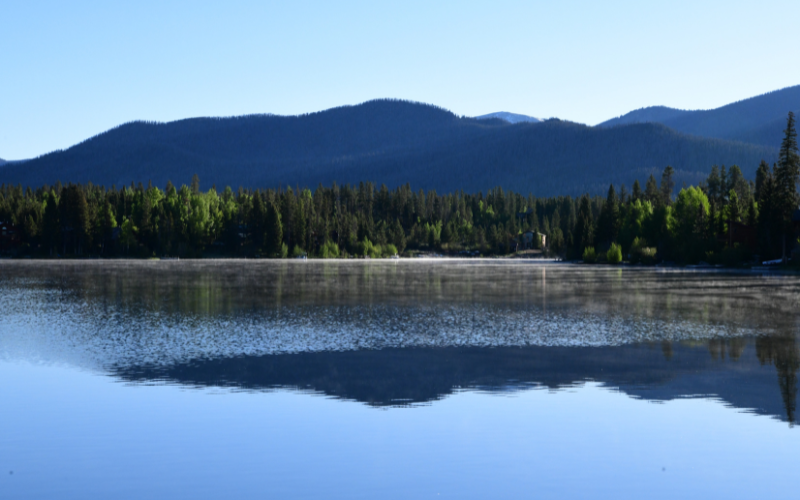
Out on the rippling waters of Grand Lake, Oklahoma, the air carries that sharp edge of November—crisp enough to remind you winter's knocking, but still holding onto the warmth of a reluctant fall. The Toyota Series Championship, sponsored by Phoenix Boats, kicked off under skies that mixed blue perfection with gusts that tested every skipper's grit. It's the kind of setup that gets a guy's blood pumping: 175 pro anglers and 175 co-anglers, a blend of homegrown heroes who know these coves like the back of their hands and big-name pros who've chased trophies across the map. The payout's no joke—up to $235,000 for the angler who cracks the code, plus a shot at those coveted REDCREST spots that can launch a career into the big leagues.
This isn't some casual weekend cast; it's the culmination of a season's worth of sweat and strategy. Boats lined up at takeoff like soldiers on parade, decks cluttered with everything from finesse rigs for picky fish to heavy artillery for when the bite turns aggressive. The lake, sprawling across the Ozarks with its timber-choked shorelines and deep, shadowy drop-offs, feels alive but unforgiving right now. Locals whisper about a turnover that's scattered the bass like leaves in the wind—schools busted up, patterns all jumbled between summer holdouts and the first hints of fall feeding frenzies. Anglers are eyeing weights in the mid-teens per day to claim victory, a far cry from the slugfests this place can deliver when everything aligns.
The weather's playing its part in the drama, too, serving up a four-day forecast that's as changeable as a politician's promise. Day one dawned warm but blustery, the kind of wind that whips spray across the windshield and makes spotting subtle ripples a real test of eyes and patience. Nothing like the howling mess that capped practice rounds, but enough to keep boats dancing on the chop. Things calm down for day two—warm again, with winds dropping to a whisper, giving everyone a breather to dial in their spots without fighting the elements every cast. Come day three, the mercury dips for a crisp morning start, cooling the air to that invigorating bite that wakes you up, paired with a touch more breeze to stir the surface. And Sunday? Well, that's the wildcard finale nobody's envying: highs scraping the 40s, gusts ripping through like they're late for a meeting. Smart money says most folks will be trailering home by then, heaters cranked, replaying the week's highlights over a cold one.
Talk around the ramps paints a picture of a tournament that's going to reward the stubborn and the smart in equal measure. Pros like Todd Castledine, chatting on Bass Talk Live, pegged a winning daily bag at 16 pounds—solid, but nothing to brag about at the dock without a kicker or two. He'd even take his swings with 15 pounds a day, knowing consistency trumps fireworks in a grind like this. The bite's scattered, they say, with fish hugging the stained shallows where the dirt clouds up from current or lurking out in 30 feet of clearer green. It's that awkward in-between—late summer lethargy clashing with fall's urge to bulk up—leaving no easy milk runs.
Josh Teply knows the lake's moods better than most. Fresh off a BFL Regional win here in October, where he sacked 23 pounds on day two for a 38-14 total that had folks shaking their heads in awe, he's not sugarcoating the shift. "The fishing is not what it was. The lake has turned over, and it’s got really tough; it’s not the same as it was two weeks ago," Teply said. "The fish are really scattered right now. There are not a lot of good schools. I think a guy that sticks to their strengths, whether they’re wanting to fish shallow or fish deep, they just need to go do it all day. I don’t think you can do the typical Grand, where you can go up shallow for a bit and then go out deep. I think you’re going to have to put a bait in your hand and do it all day, whether that’s flipping docks, spinnerbait on docks (I think that bite is going), and I think some of the offshore fish are still playing."
Teply's words echo what every deckhand's feeling: no more hopping from shallow buzzbait blasts to deep crankbait cruises like you could in peak season. It's commit or go home—lock in on flipping those stained wood lines, maybe a chatterbait skirting the edges, or drop-shotting the ledges where bass are schooling but spooky. He wouldn't blink at a 48- or 50-pound four-day total taking the title, but the cut to the top 25? That's looming around 12 pounds a day, tight enough to make every cull count. And his gut? It's deep water that seals the deal, not the bank-pounders, though he's got respect for anyone who proves him wrong.
Blake Capps, the guy who hoisted last year's BASS Nation fall trophy on these same waters, sees it through a shallow-water lens but can't deny the mess. The warmth's kept too many bass suspended out deep, while a smattering chase shad up high—everywhere and nowhere, as he puts it. "It’s been warm, so there’s still a lot of fish out deep, and there are some up shallow," he said. "They’re everywhere, but hardly anywhere, if that makes sense. It’s hard to catch ‘em right now, they’re very spread out. I’m going to try to hone in on a few things for sure. I’ve got some things shallow and some deep stuff, too. It’s literally junk fishing right now on Grand Lake – normally, you could lock a topwater in your hand and go down the bank and get bites. It’s hard to get a bite right now; it’s hard to catch five."
Junk fishing—that's the term that sticks, evoking those long, fruitless drifts where you're piecing together a limit from singles and doubles, no patterns to lean on. Capps, a bank-beater at heart, is doubling down on the shallows anyway. November in Oklahoma should flip the switch, he figures, with cooling nights pushing bass in to gorge on craws and baitfish. "I almost feel like you have to lock in," he added. "It’s hard to get a shallow bite, and it’s hard to get a deep bite. I think if you’re going to fish deep, you need to do it all day. I’m going to try to get the shallow thing going. It’s November in Oklahoma; they should be going shallow to feed, and we’re starting to get some cool nights."
Weights? Expect a dogfight. Capps eyes 26-and-a-half pounds to sneak into the top 25, a drop from the usual 14-a-day benchmark. "I think 26 1/2 pounds will get you close to being in the Top 25. Normally, I would say 14 a day would get you in the Top 25," he said. "I think weights are going to be very tight. It’s like this in any tournament, but a 4-pounder or bigger is going to be a key bite. I’ve caught a few in practice, so hopefully I can catch a few today. But, I’m liable to see the dam or the river. I’m going to be all over the place." That scattershot approach—river runs one hour, dam structure the next—sums up the chaos. A single four-pounder could swing a day, turning a meh bag into a contender.
Uncertainty's the spice here, keeping egos in check and strategies sharp. "I wouldn’t be shocked to see 48 or 50 pounds win this thing," Teply reiterated. "I think that Top 25 cut is going to be in the 12-pound [per day] range, I don’t think it’s going to be very high. I think it’s won deep, not shallow. I’ve done both, and I just don’t see it up shallow. But, maybe somebody else does." Capps chimes in on the wildcard factor: "It could be won ‘Scopin’ deep or traditional fishing up shallow," he said. "It’s going to be interesting; it should be a very fun tournament to watch for viewership. I think being consistent is going to be hard. It’s going to be a fun one, but the way that I’m fishing, it’s going to be hard to catch five. It’s going to be a Grand grind, is what it’s going to be."
That grind's got a silver lining, though: the fresh blood mixing it up with the veterans. Seventeen percent of the field brings college fishing chops, from grizzled alums like Jake Lee (Bryan College, 2016-2021) and Blake Schroeder (Stephen F. Austin, 2014-2017) to the Class of 2025 crew still shaking off dorm dust. Twenty-one anglers total juggled classes and casts this year to punch their ticket here—three on the co-angler side, the rest swinging for pro fences.
Leading the pack from the books? Heavy hitters like the University of Montevallo and University of North Alabama, schools turning out champs like it's their job. Montevallo's Easton Fothergill just claimed the Bassmaster Classic this year, their team snagged a fourth Tackle Warehouse School of the Year nod from MLF, and Peyton Sorrow with Brody Robison took down the national title. Over at UNA, it's a dynasty vibe: Banks Shaw owned the Tackle Warehouse Invitationals, earning Fishing Clash Angler of the Year and Polaris Rookie of the Year honors. His teammate Dylan Nutt? Back-to-back Toyota Series wins this winter on Pickwick and Chickamauga—talk about carrying momentum into November.
The full roster of 2025 college qualifiers reads like a who's-who of tomorrow's stars: Garrett Wilson from Campbellsville University (co-angler), Carsen Adcock out of LSU Shreveport, Kaden Mueck from Stephen F. Austin, Carson Holbert of Montevallo (co-angler), Dylan Quilatan from North Alabama, Chance Shelby splitting time between LSU Shreveport and Southeastern Louisiana, Hayden O’Barr from Alabama, Tripp Berlinsky bouncing Bryan and North Alabama, Preston Kolisek from North Alabama, Levi Thibodaux from LSU Shreveport, Jaxson Freeman from McKendree (co-angler), Ethan Fields from McKendree, Carter Nutt from North Alabama, Dylan Nutt from North Alabama, Levi Kohl from Murray State, Nick Dumke from Montevallo, Banks Shaw from North Alabama, Nathan Reynolds from North Alabama, Benjamin Travis from Auburn, Brody Robison from Montevallo, and Peyton Sorrow from Montevallo. These kids aren't just filling seats; they're the ones graphing waypoints and tweaking lures with data-driven precision, blending old-school feel with new-age tech.
Speaking of tech, this week's got an asterisk—or maybe a exclamation point. With Toyota Series rules tightening the reins on forward-facing sonar come 2026, Grand Lake's serving as a swan song for full-throttle 'scoping. Imagine it: anglers glued to screens, picking apart 30-foot depths for cruising schools amid the lake's notorious clutter of shad, stripers, and white bass imposters. It's a skill that's rewritten the game, letting pros like these snipe fish that'd ghost traditional tactics. But here, where the water's stained and structure's tangled, it's no cheat code—false reads abound, demanding sharp eyes and sharper instincts. This field's primed for breakthroughs: college whizzes cross-pollinating with pros, maybe birthing a deep-water derby no one's scripted before. Or hell, it could flip to a classic spinnerbait slug on docks, blades flashing through the wind, 22-pound fluoro screaming off baitcasters. Either way, the top 10 baits reveal might read like a throwback—jigs, chatterbaits, topwaters—proving edges come from grit as much as gadgets.
Local know-how could be the quiet killer, too. That perfect willow shade line for a jig, or a spinnerbait willow-leaf-willow combo that matches the fleeing shad. Or something offbeat—a ned rig in the grass, a frog over hydrilla that nobody's hit yet. With over 200 grand dangling, easy's off the table; it's the guys who grind through the blanks, cull the right upgrade, who'll hoist the hardware.
If you're courtside for this showdown—and why wouldn't you be?—tune in daily for the play-by-play. Online streams roll from launch to lines-out, with live weigh-ins firing up at 3 p.m. Central. Day three's the main event: top 25 pros duking it out on MLFNOW! from dawn's crack, vying for that crown under mounting pressure. It's the stuff that hooks you—the roar of outboards, the tension of the scales, the stories swapped over limits that came the hard way. Grand Lake's delivering a bass battle for the ages: tough, tactical, and full of those what-if moments that keep you coming back. Grab a coffee, fire up the screen, and settle in—because when the dust (and water) settles, it'll be one for the scrapbook.


