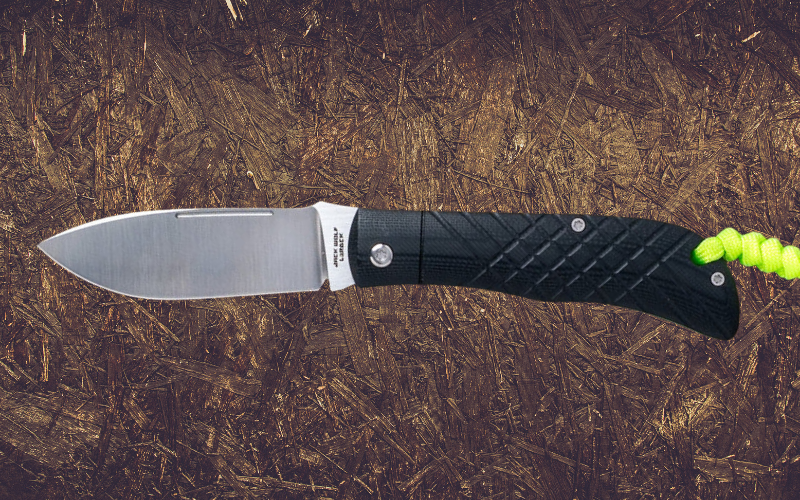
As the calendar flips to 2026, knife enthusiasts are already buzzing about what's coming down the pipeline from their favorite makers. One release standing out early in the year comes from Jack Wolf Knives, a brand that's built a solid reputation for blending old-school charm with contemporary edge. They're gearing up to drop the Timber Jack later this month, and it's shaping up to be their largest slipjoint design to date.

Image credit: Jack Wolf Knives
What makes this knife particularly interesting is its roots in a collaboration. The Timber Jack started life as a custom piece from Tracy LaRock, a respected knifemaker whose designs fit perfectly in that sweet spot between classic traditions and modern updates. LaRock has earned his stripes creating pieces that honor the past while delivering performance that holds up in today's world. His Timber Jack became something of a signature pattern for him, but like most custom slipjoints, getting your hands on one meant waiting for limited runs or lotteries. Now, thanks to this partnership with Jack Wolf Knives, that same design is heading to production in a way that keeps the spirit intact while making it reachable for more collectors and users.
At the heart of the Timber Jack is a 3.4-inch spear point blade, which gives it the kind of size and presence usually seen in modern folding knives rather than traditional slipjoints. That length opens up a lot of practical possibilities for everyday carry and tasks around the house, shop, or outdoors, without crossing into restricted territory in many places. The blade material across both versions is 154CM steel, a choice that's proven itself over decades. It's known for striking a good balance—decent edge retention, reasonable toughness, and ease of sharpening—qualities that have made it a go-to for many custom makers working in this style.
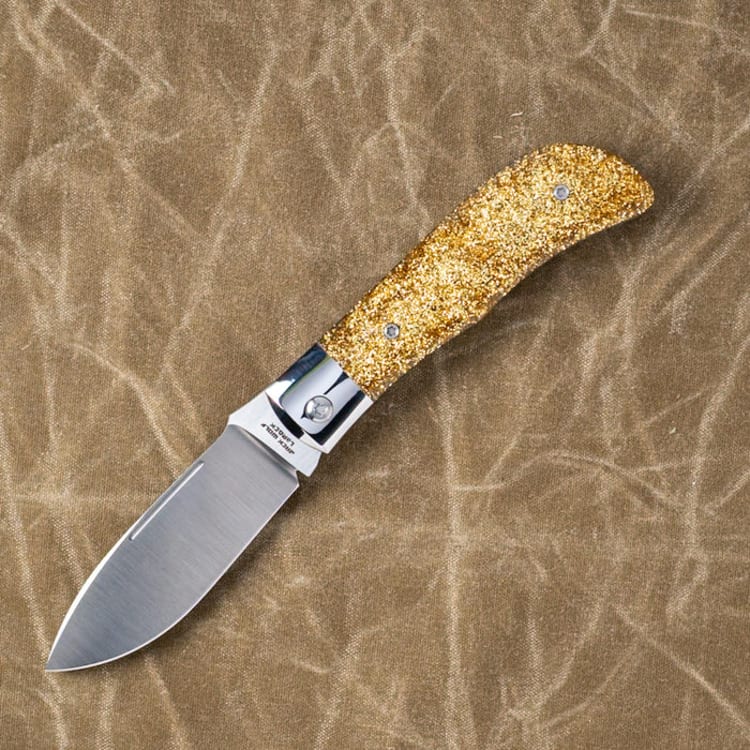
Image credit: Jack Wolf Knives
The handle design really sets the Timber Jack apart and shows how faithfully Jack Wolf has translated LaRock's original vision. There's a distinctive ridged grip that splits into two separate zones, giving your fingers clear places to settle for better control during use. It's one of those thoughtful details that can make a real difference when you're handling the knife for extended periods, whether cutting rope, prepping food on a camping trip, or tackling odd jobs.
Jack Wolf has added their own touch by offering the Timber Jack in two distinct series, each with different material options to suit various tastes and budgets. The Ultralight models feature cross-hatched G-10 scales paired with smooth faux bolsters. That G-10 provides a secure, textured hold even in wet conditions, and the contrasting liner elements add a sharp visual pop that catches the eye. On the other side, the Steel Series steps it up with genuine steel bolsters for added weight and durability. Buyers can choose from four scale materials here: a brown/black Richlite that offers a sophisticated, layered look; red canvas Micarta for a rugged, hardworking feel; or two variations of Kirinite that bring some bold patterning and shine to the mix.
All these choices mean the Timber Jack can adapt to different preferences—some guys might lean toward the lighter G-10 setup for pocket-friendly carry, while others appreciate the heft and premium finish of the steel-bolstered versions. Either way, the overall aesthetic walks that line between timeless slipjoint elegance and a subtle tactical vibe, making it versatile enough to pull double duty as a gentleman's folder or a capable tool.
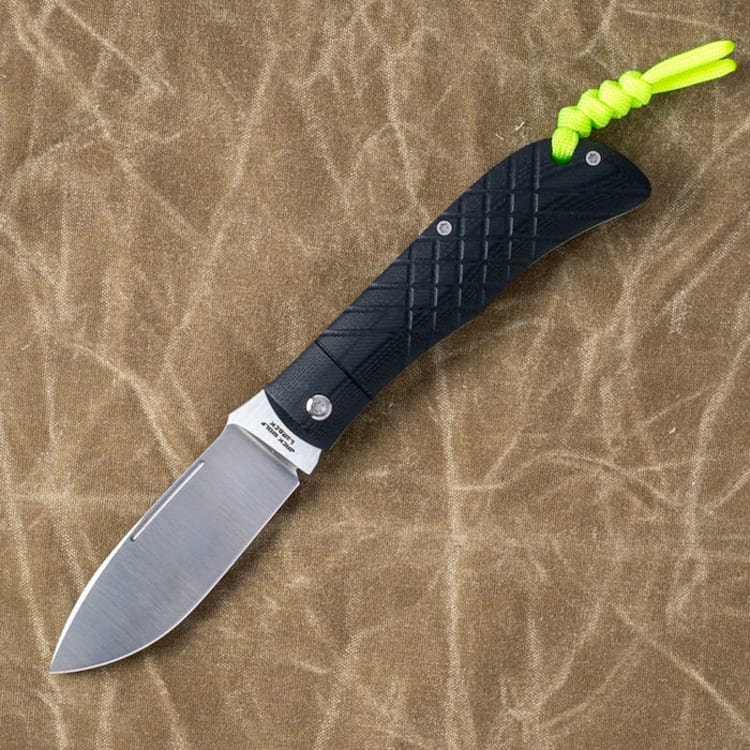
Image credit: Jack Wolf Knives
Mark your calendars for January 16th, because that's when Jack Wolf Knives plans to make the Timber Jack available. Given the brand's track record and the appeal of finally having LaRock's standout design in production form, these are likely to move quickly. For anyone who's been holding out for a slipjoint that brings bigger blade utility without sacrificing tradition, this could be the one worth watching closely.
In a market flooded with high-tech flippers and one-hand openers, it's refreshing to see a company like Jack Wolf staying committed to non-locking patterns while pushing their boundaries. The Timber Jack feels like a natural evolution, bridging the gap for those who value heritage but demand real-world performance. As 2026 unfolds, it'll be interesting to see how this model stacks up once it's in users' hands and out in the field. One thing seems clear already: it's poised to become a benchmark for what a modern traditional slipjoint can achieve.


