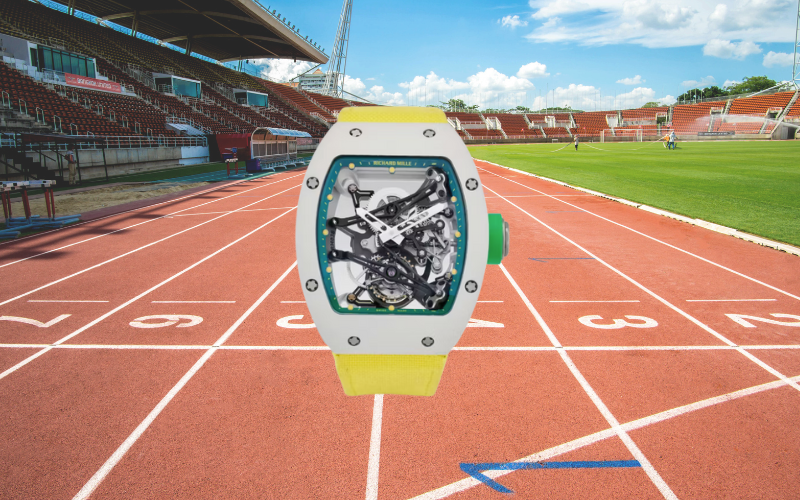
In the world of high-stakes sports, where every second and every ounce matters, you'd think top athletes would strip down to the basics. No extra weight, no distractions. Yet, back in 2012, during the Olympic 100-meter final in London, Yohan Blake strapped on a Richard Mille RM38 Prototype while racing against Usain Bolt, the fastest man alive. Blake, the reigning world champion at the time, had all eyes on him, but he chose to wear this luxury watch anyway. It wasn't just any accessory—it became a symbol of bold choices under pressure.
Amanda Mille, the Director of Brand and Partnerships at Richard Mille, shared some insight into that moment. "He wasn't supposed to wear it. At the time, the athletes were not allowed to wear anything [like this], and he did wear it," she explained. For a brand that was only about a decade old, this was huge. It put Richard Mille in the spotlight during one of the biggest events on the planet, showing off their watches in real action, not just in ads.
That Olympic race wasn't a one-off. The link between watches and athletes goes way back. Think about Mercedes Gleitze in 1927, who wore a Rolex on a chain around her neck while swimming the English Channel. It was one of the first big athlete endorsements, proving these timepieces could handle tough conditions. Fast forward to today, and watches show up in all kinds of sports. But it's different in racing cars—extra weight from a watch doesn't matter much. In running, tennis, golf, or cycling, though, grams add up. Athletes obsess over being as light and streamlined as possible.
Take Rafael Nadal, who wears his Richard Mille during intense matches at Roland Garros. Or Nelly Korda, chipping away at the U.S. Women's Open with one on her wrist. Even Tadej Pogačar, the top cyclist out there, keeps his signature Richard Mille through brutal races like the Tour de France. These pros spend fortunes on wind tunnels and gear tweaks for tiny speed gains, so why add a watch? It seems counterintuitive, but there's a method to it.
When asked how Richard Mille convinces elite athletes to wear their watches in the heat of competition, Amanda Mille kept it straightforward. It boils down to real trust and long-term bonds. "We're partners. That's why we say we're partners rather than ambassadors: because we're partners for life, and we grow up together," she said. This isn't about quick deals; it's about building relationships that last. She pointed to Mutaz Barshim, the world champion high jumper. "When you've been working for years to actually manage to get that medal—let's say Mutaz Barshim, who is a world champion high jumper—I mean, the guy could just touch with his watch the bar and just kill four years of work, you know, just for us. That's a trusting relationship."
This strategy has paid off big time. According to estimates from LuxeConsult and Morgan Stanley Research, Richard Mille ranks as the sixth largest watchmaker by market size, even though the company only started in 2001. A lot of that growth comes from these athlete ties. You don't see flashy Richard Mille ads everywhere—heck, most folks can't recall one. But people remember seeing these watches on winners. Like Blake in that Olympic sprint, or Nadal dominating on clay courts. Those moments stick because they're authentic, not scripted.
To get a take from the sports world, consider Chris Chavez, who runs Citius Mag, a go-to source for track and field news. He noted how Richard Mille's presence has grown in the sport. "Every Olympic cycle, you just notice it even more—luxury watches placed within track and field. In 2016, Wade van Niekerk also wore one when he broke the 400-meter world record. Shelly-Ann Fraser-Pryce [a Jamaican sprinter widely considered one of the best of all time] is also Richard Mille's partner and wears them in competition," Chavez said. It's a smart move for the brand, especially since they're not official sponsors. The Olympics have Omega's logos all over, and the Diamond League circuit features Seiko. But fans aren't staring at billboards—they're watching the athletes. "This is a way for a brand like Richard Mille to invest in a global sporting event when they're not the title sponsor of that event," Chavez added.
As luxury watches have gotten pricier, they've turned into treasures folks lock away, which flips the script on their roots. Early Rolex campaigns were all about tough watches for real adventures. Now, with tech like phones and GPS, athletes don't need wristwatches for timing. Tennis players aren't glancing at their arms mid-rally, and runners sure aren't clocking their own splits. Still, these pros choose to wear them. Maybe it's like putting on lucky jewelry—boosts confidence, makes you feel ready to conquer. In big-time sports today, when you spot a watch on an athlete's wrist, it's often a Richard Mille. The brand brings back that idea of a watch as a tough sidekick, not just bling for the shelf.
What's unique is how Richard Mille pushes athletes to actually use the watches hard. Amanda Mille laughed about it: "Funny enough, most of the time, they're always really scared to scratch the watch and break them. And we're like, 'No, please, do it! Please enjoy it and get back to us with all the feedback as much as you can because they're made for that.'" They want the dings and stories that come from real wear.
The company doesn't chase big names just for fame. They build from the ground up. "We love to be there at the beginning when no one knows these people. We also love to help this young crowd get a bit of freedom to work even harder to get to the top level," Mille explained. Take Charles Leclerc in Formula 1—he started with Richard Mille back in his karting days, when he was unknown. Now he's with Ferrari. "We started with him when he was doing karting. No one knew him. And when you see that today, it's Ferrari. It's way more authentic than just being able to put your watch on the most famous wrist. Everyone can do that, it doesn't make sense," she said.
Chavez addressed the weight issue head-on. Sure, a watch adds grams, but it's not a deal-breaker. "You could see the argument for, does it weigh the person down? But then, these same athletes could be wearing multiple chains on the starting line. If you wanted to be as aerodynamic as possible, then everyone would shave their heads. In general, it's not as big of a trade-off in terms of time," he pointed out. Plus, for track stars, money talks. They're not pulling in Formula 1 or tennis salaries. "These athletes don't get paid to the level of Lewis Hamilton or Rafa Nadal. Every Olympic cycle, they're presented with these higher-level sponsorship opportunities that you just can't say no to," Chavez noted. In close races, the watch might even cross the line first in photo finishes—talk about free publicity.
All this circles back to one wild idea: Could an everyday guy run a marathon wearing a Richard Mille? These watches are built tough, light enough for sprinters and cyclists to trust them in grueling events. Pogačar crashes hard, jersey torn, blood everywhere, but his watch holds up. Barshim clears bars at the Tokyo Olympics with gold on the line, watch intact. Mathieu van der Poel powers through Italian stage races like Tirreno-Adriatico, no issues. If pros handle that, a marathon pace might not faze it.
Richard Mille revives the thrill of watches in action, reminding us they're tools for life's big moments, not just status symbols. As events like Watches and Wonders roll around, showcasing new models, it's worth thinking about what folks do with them. Do they sit in safes, or hit the track, court, or trail? In the end, as Amanda Mille summed it up: "That's the only way to do beautiful things together." For athletes chasing glory, and fans watching from the stands, these partnerships show how a simple watch can become part of the victory story.


