The Dakar Rally stands as the ultimate test of man and machine, pushing vehicles and drivers through some of the harshest terrain on earth. For years, this grueling event has drawn adventurers who crave real challenges, and now the iconic British Defender brand has stepped up in a big way. As the official car partner, Defender isn't just showing up—it's playing a key role behind the scenes, helping shape the very routes that make the rally so unforgiving.
It all started with the 2025 edition, where Defender kicked off a four-year deal running through 2028. Right from the beginning, they supplied a solid fleet of vehicles to handle logistics, shuttling race officials and important media guests across the vast Saudi Arabian landscape. But the real heavy lifting comes from a special group of six modified Defenders built specifically for route reconnaissance—the tough job of scouting and verifying every twist and turn before the competitors ever see it.
These recce vehicles are the unsung heroes of the Dakar. Organizers need machines that can handle weeks of pounding through remote deserts, proving out thousands of kilometers of stages. The rally covers several thousand kilometers over 10 to 15 days, winding through isolated areas where there's no room for breakdowns or shortcuts. Officials drive these paths repeatedly, checking for dangers, measuring distances, and ensuring the course is fair yet demanding. It's exhausting work—long hours behind the wheel on dirt tracks, loose sand, massive dunes, and rocky sections that would stop lesser vehicles cold.
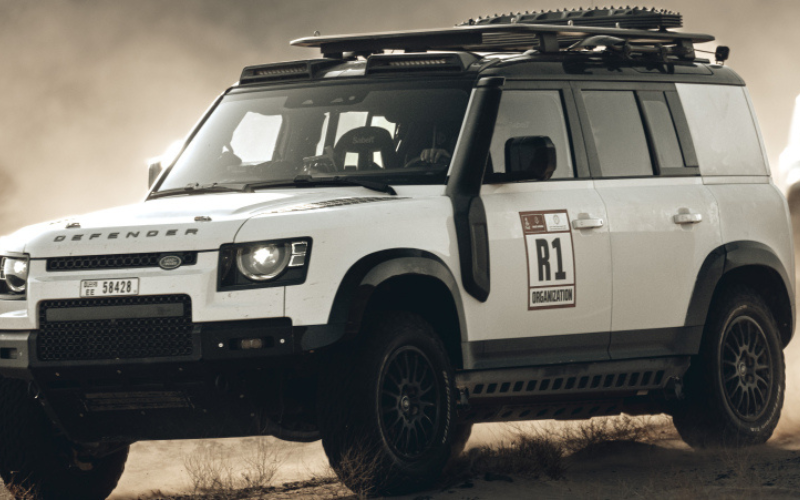
The first two of these specialized Defenders have already been out there, finalizing details for the 2026 rally. They're based on the reliable P300-powered 110 models, but with serious upgrades to tackle the desert's punishment. Safety comes first, so each one has a full roll-cage and seats only three people, using four-buckle harnesses to keep everyone secure. That setup frees up extra room inside for all the gear needed on these extended trips.
Under the hood, the four-cylinder P300 engine stays mostly stock, but it gets a rally-spec cooling pack and a high-level air intake with a cyclonic pre-filter to keep dust out and performance strong in the heat. They roll on all-terrain tires mounted to 18-inch wheels, paired with rally-grade dampers for better handling over rough ground. Reinforced underbody protection guards against rocks, and elevated recovery points make it easier to pull the vehicle free if it gets stuck.
Storage is crucial when you're far from civilization, so these Defenders come with a heavy-duty roof-rack that can haul 132 kilograms—about 291 pounds—of equipment. Tools, spare parts, an emergency recovery kit complete with sand ladders—everything needed to get unstuck in deep sand. There's even an auxiliary fuel tank that adds up to 700 kilometers (around 435 miles) of extra range, vital for those long recce runs.
Nights in the desert mean camping out under the stars, so the setup includes practical touches like a fridge for keeping food fresh, extra lighting for working after dark, and a 40-liter (about 10.5-gallon) water tank for basic showers. It's all about self-sufficiency, allowing the teams to stay out longer and get the job done right.
Once the route is locked in—and remember, competitors don't see the full details until each stage starts—these same recce Defenders switch roles. They lead the way to "open" each competitive section during the actual rally, making sure everything is clear and safe before the racers charge through.
This partnership goes beyond just lending vehicles. Defender's involvement highlights what the brand has always been about: real capability in extreme conditions. Guys who appreciate tough, no-nonsense four-wheel drives know the Defender's reputation—it's built for adventures that test limits, from remote trails to full-on expeditions. Supplying these recce units proves that in the real world, where reliability matters more than flash.
The Dakar isn't getting any easier. Routes in Saudi Arabia feature endless dunes that swallow tires, rocky passes that batter suspensions, and open expanses where navigation can make or break a run. Officials have to validate every kilometer, often camping in isolated spots with minimal support. That's why they demand vehicles with proven durability.
Beyond the recce work, Defender provides additional vehicles during the rally itself for transporting key personnel. In 2025, a fleet handled those duties reliably, getting people where they needed to be despite the harsh environment. This kind of support keeps the event running smoothly, year after year.
Looking ahead, the commitment runs deep. With the partnership locked in until at least 2028, these specialized Defenders will keep scouting routes for future editions, ensuring the Dakar remains the benchmark for off-road endurance.
For anyone who's ever tackled tough backcountry drives or dreamed of pushing a capable rig to its edges, Defender's role in the Dakar hits home. It's not about show—it's about getting the job done in places where most vehicles would falter. These recce Defenders are out there right now, carving through the sand and rocks, defining what the next generation of rally warriors will face. That's the kind of real-world proving ground that builds legends.


