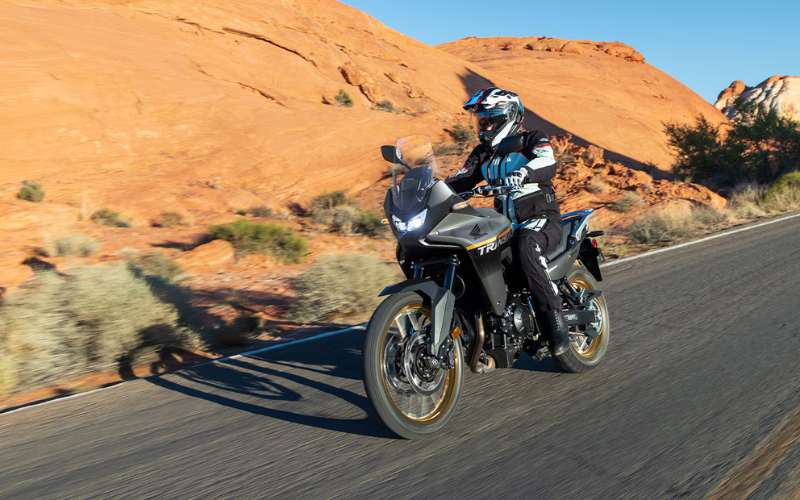
Every year at the big Milan motorcycle show, the spotlight usually lands on the wild new models, the ones with crazy horsepower or radical looks that make everyone lose their minds. This November was no different, flashy new adventure bikes stole the headlines. But while the crowd was busy drooling over the latest 150-horsepower monsters, Honda quietly rolled out the updated 2026 XL750 Transalp and, for guys who actually ride dirt roads and fire trails instead of just posing on Instagram, the changes Honda made are a very big deal.
The Transalp has always been the sensible choice in the middleweight adventure class: reliable, comfortable on the highway, decent in the rough stuff, and priced so you don’t have to sell a kidney to own one. Last year Honda already gave it sharper styling borrowed from the Africa Twin, a proper 5-inch color TFT dash with phone connectivity and turn-by-turn directions, and suspension that finally soaked up rocks instead of beating you to death. It stopped feeling like the “nice guy” of the segment and started looking like it meant business.

Image credit: Honda
For 2026 Honda didn’t reinvent the bike; they just fixed the things that were still holding it back from running with the class leaders, especially the Yamaha Ténéré 700 that so many riders swear by.
The headline upgrade is fully adjustable Showa suspension front and rear. Before, the Transalp’s forks and shock only let you tweak preload. Fine for street riding, but once you got into serious rocks or high-speed dirt, you were stuck with whatever Honda’s engineers thought was best. Now both the 43 mm upside-down forks (7.9 inches of travel) and the Pro-Link rear shock (7.5 inches) give you clickers for compression and rebound damping. That means you can dial it in soft for all-day forest roads or firm it up when you’re blasting whoops out in the desert. Real riders know how big that is.
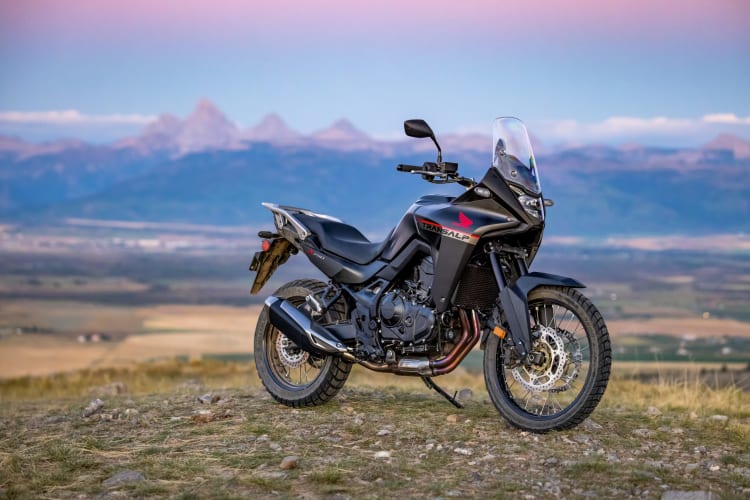
Image credit: Honda
Next up is Honda’s clever E-Clutch system, now optional on the Transalp. If you’ve never tried it, picture this: you can leave the clutch lever completely alone, start from a stop, bang through the six gears, and come to a halt without ever pulling the clutch. Flick a switch on the left bar and you’re back to a normal manual clutch whenever you want it. Out on loose trails the computer blips the throttle for you on downshifts and makes upshifts buttery smooth even when the rear tire is spinning. Guys coming back from long rides with sore wrists or bad shoulders are going to love this thing. Yeah, it adds 13 pounds (bike goes from 463 to 476 pounds wet), but most riders will call that a fair trade.
If you order the E-Clutch model, Honda now bolts on a real aluminum skid plate from the factory, 2.5 mm thick and wrapped around to protect the exhaust and oil pan. No more spending an extra $300 after you buy the bike. Little touches like that show Honda’s listening.
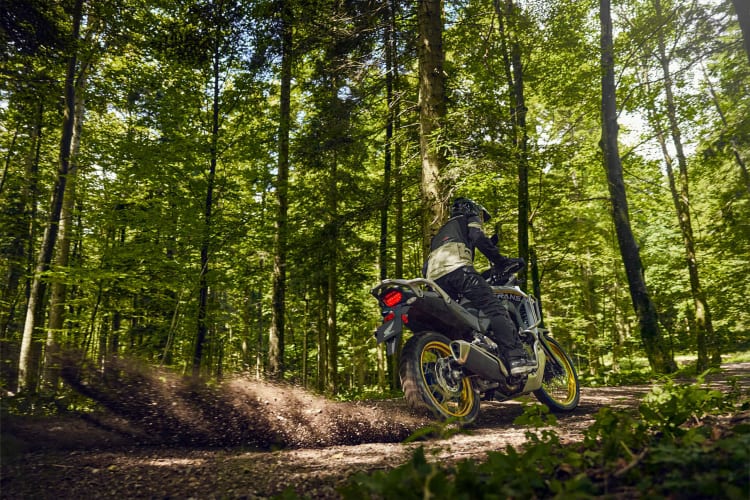
Image credit: Honda
The engine is the same punchy 755 cc parallel twin that’s been winning fans, 90 horsepower and 55 lb-ft of torque in Euro trim, which smokes the Ténéré’s 72 horses and 50 lb-ft. Top speed is still pegged at 121 mph, plenty for any paved road you’ll see in America, and it returns a legitimate 54–55 mpg when you’re just cruising. Tank holds 4.5 gallons, so 220–240-mile range is realistic before you hit reserve.
Seat height stays friendly at 33.5 inches, almost a full inch lower than the Yamaha, and ground clearance is a solid 8.3 inches. Spoke wheels (21-inch front, 18-inch rear) wear tube-type tires, so if you puncture way out in the boonies you can still fix it with plugs and a hand pump instead of calling a tow truck.
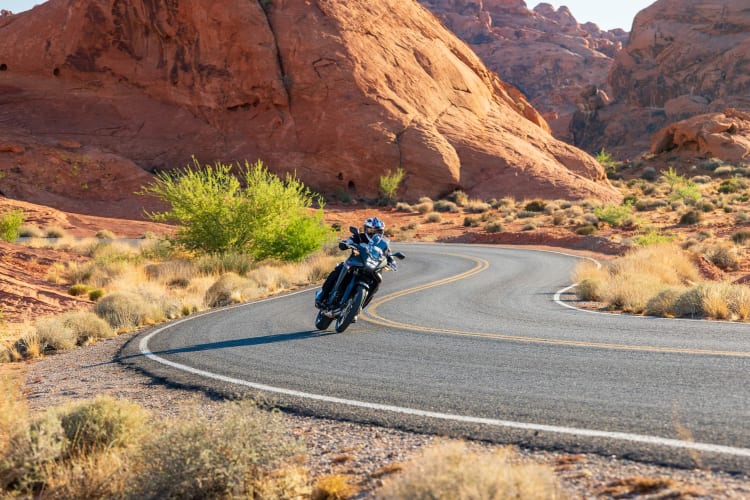
Image credit: Honda
You still get switchable rear ABS, traction control with three levels plus off, and five riding modes (Sport, Standard, Rain, Gravel, and two customizable User settings). The dash connects to your phone via Honda RoadSync for navigation and music, and there’s even a USB-C port under the seat.
New for 2026 are three fresh color schemes: a sharp Ross White Tricolour, a stealthy Mat Ballistic Black Metallic, and a tough-looking Pearl Deep Mud Gray. U.S. pricing and exact arrival dates haven’t been announced yet, but if Honda keeps the pattern from 2025, expect the base model to land somewhere around $10,000–$10,500 and the E-Clutch version maybe $800–$1,000 more. That still undercuts a fully optioned Ténéré 700 by a noticeable chunk.
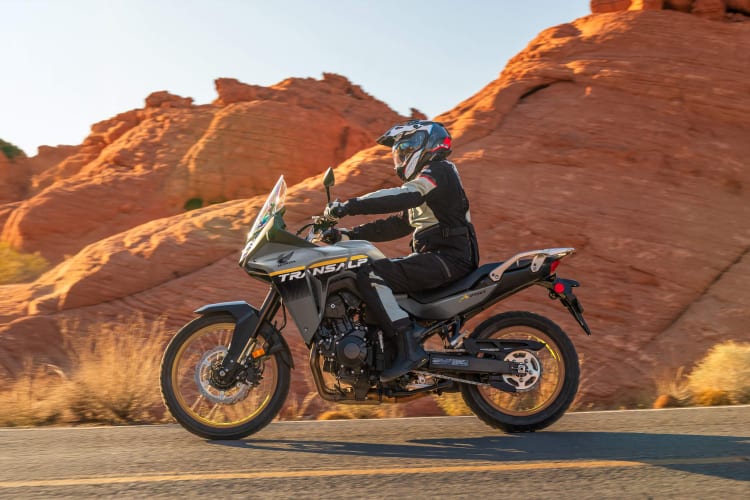
Image credit: Honda
Bottom line: Honda didn’t try to build the most extreme middleweight adventure bike on the planet. They took a bike that was already easy to live with every day and gave it the exact tools serious riders asked for, adjustable suspension that actually works off-road, a clutch you can ignore when your hand is tired, and underbelly protection right out of the crate.
For a lot of experienced riders who’ve put hundreds of thousands of miles on everything from old XR650s to the latest Euro superbikes, the 2026 Transalp is starting to look like the one bike that finally does it all without forcing you to compromise. And it did it so quietly that half the internet still hasn’t noticed.
Yamaha might want to keep an eye on the rear-view mirror. The sensible Honda just got a lot less sensible, and a whole lot more dangerous.


