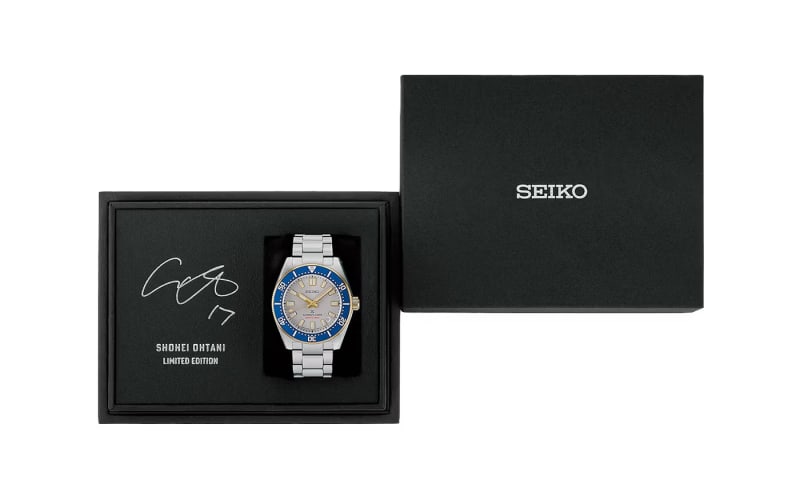
Seiko has announced a pair of limited-edition Prospex watches built to honor one of baseball's most dominant players right now. The two new Shohei Ohtani Limited Edition timepieces celebrate the Los Angeles Dodgers star's back-to-back World Series victories and his consecutive MVP titles — achievements that have cemented his place in the sport's history.
The watches are rooted in history before they even get to the modern details. Both models draw from Seiko's 1965 Diver's Heritage design, a silhouette the brand has long leaned on when it wants to say something serious. That foundation gives the pieces a sense of weight and purpose that feels appropriate for a player of Ohtani's caliber. The design has been reworked here with specific touches that speak directly to who Ohtani is and what he's accomplished.
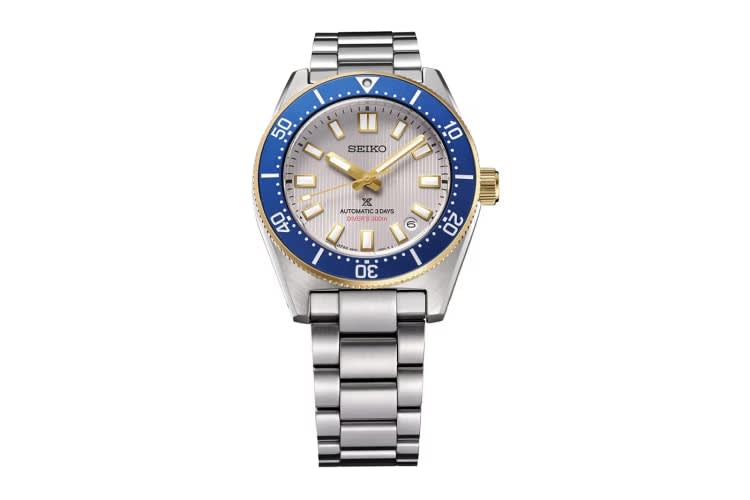
Image credit: Seiko
Each watch carries a bold dial trimmed with gold tones. That color combination isn't random — it was pulled directly from the rare MLB logo patch that only a select group of players ever receive. Ohtani is among them, which makes the nod feel personal rather than decorative. The gold against black gives the watch a strong, clean look on the wrist that doesn't need to work hard to get attention.
The details get more specific from there. The crown of each watch is engraved with the number 17, Ohtani's jersey number. It's a small thing, but it's the kind of detail that separates a watch that was made for someone from one that simply has their name attached to it. The exhibition caseback carries both his name and a unique serial number, so every piece in the run can be identified individually.
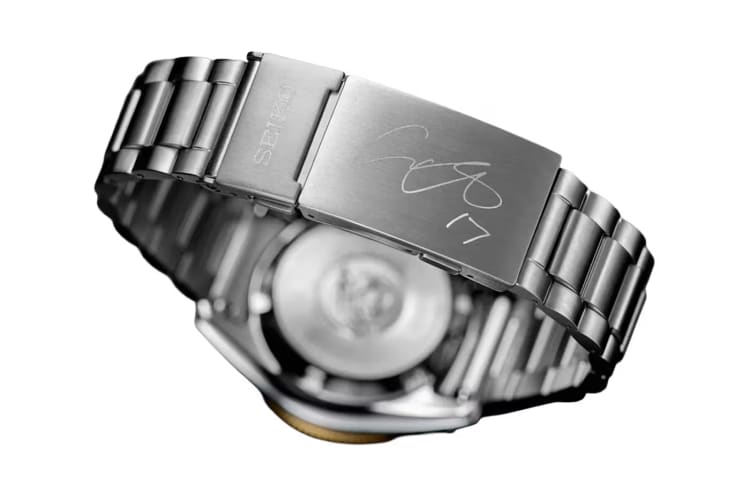
Image credit: Seiko
The bracelet clasp is where the watch earns points for practicality alongside the collector appeal. It features Ohtani's signature and comes with a six-stage micro-adjustment mechanism that allows the bracelet to expand up to 15 millimeters. For anyone who has ever dealt with a watch that fits perfectly in a store and then becomes uncomfortable by midday, that kind of adjustability is genuinely useful. It means the watch can be worn through different conditions — warmer months, long days, whatever the situation calls for — without becoming a nuisance.
The production numbers were chosen with the same intentionality as the rest of the design. Each variant is strictly limited to 1,700 pieces, a direct reference to the number 17 on Ohtani's back. With two variants in the release, the total production across both models comes to 3,400 watches. That's limited enough to carry real collector value while not being so scarce that the pieces exist purely as vault items.
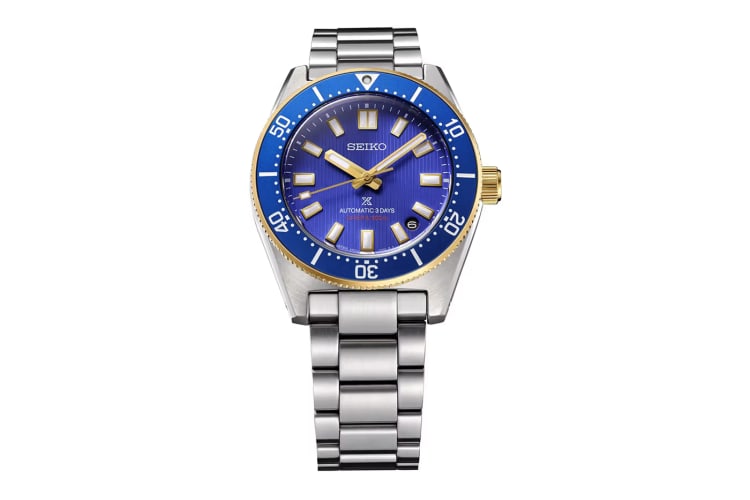
Image credit: Seiko
Both watches are set to launch on April 24, 2026, exclusively in Japan through Seiko and select authorized dealers. Each is priced at 286,000 Japanese yen, which works out to roughly $1,832 US dollars at current exchange rates.
For American fans of Ohtani — or anyone who has been watching what he's done in Los Angeles — the Japan-only availability is the part that stings. There is no current indication that the watches will reach the United States market through official channels, which means those interested would need to go through a proxy buyer or a secondary reseller, likely at a premium above the retail price.
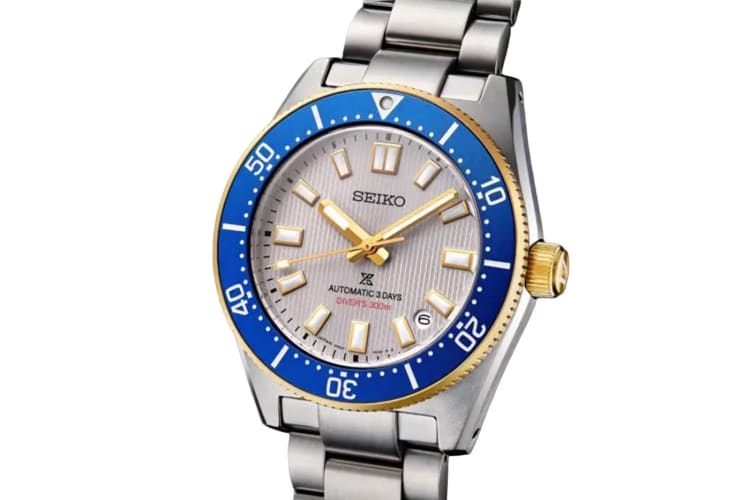
Image credit: Seiko
That said, the watches represent something that doesn't come along often. Seiko doesn't hand out collaborations carelessly, and a release built this specifically around an athlete's story — not just his face on a dial — carries a different kind of legitimacy. The 1965 diver base is a respected design. The gold and black execution is sharp. The practical clasp adjustment makes it something a person could actually wear regularly rather than leave in a case. And the serial numbers mean that each of the 1,700 pieces per variant is its own distinct object.
Shohei Ohtani's run since arriving in Los Angeles has been the kind of story that doesn't need embellishment. Two World Series rings. Back-to-back MVP awards. The rare MLB logo patch that most players never see. Seiko has built a watch that tries to carry that story on its dial and caseback without overdoing it — and for the most part, the details they chose suggest they understood what made that story worth telling.
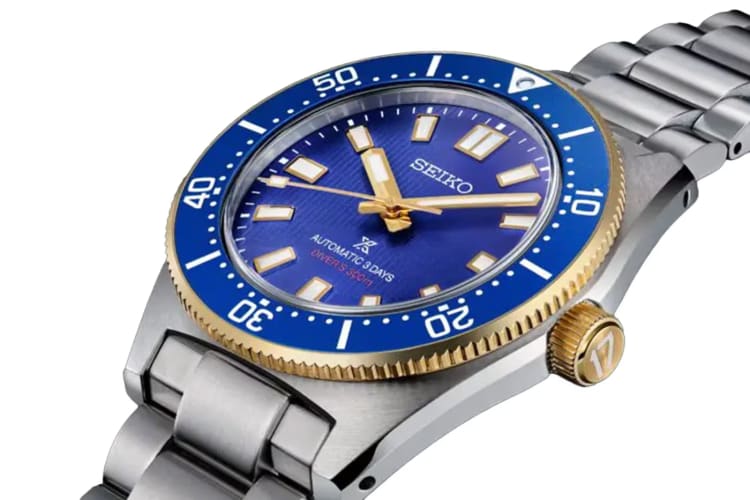
Image credit: Seiko


