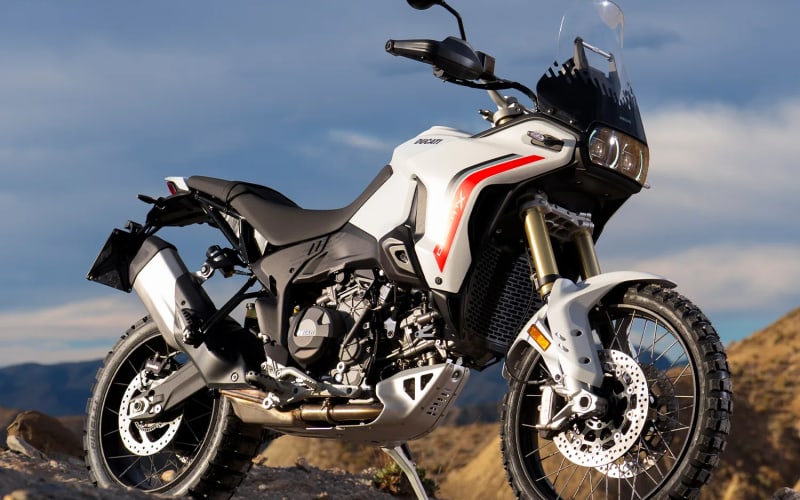
There is a certain kind of rider who remembers exactly where he was when he first saw the original Ducati DesertX. The big front wheel, the rally-inspired bodywork, the unmistakable Italian attitude baked into every line of the thing — it was the kind of machine that made grown men stop scrolling. Ducati had built something serious, a genuine adventure bike that could haul you across continents or deep into the backcountry without apologizing for either.

Image credit: Ducati
That was 2021. Five years later, Ducati has gone back to the drawing board on the DesertX, and what has come out the other side is something the motorcycle world does not see all that often: a second-generation bike that improves on the original in nearly every meaningful way while actually costing less money to buy and less money to keep running.
The new machine is called the DesertX V2, and it arrives with a redesigned engine, a completely rethought frame, updated suspension, better brakes, more sophisticated electronics, and a starting price of $16,995 — two thousand dollars cheaper than the original when it launched. For riders who have been watching this bike from a distance, wondering if the timing was ever going to be right, the timing is right now.
The Engine Debate, Settled in the Dirt
No conversation about the DesertX V2 starts anywhere other than the engine, because the engine change is the one that got people talking the moment the bike was revealed at EICMA last fall. Ducati pulled out the 937cc Testastretta, an engine with genuine personality and a devoted following, and replaced it with a new 890cc V-Twin.
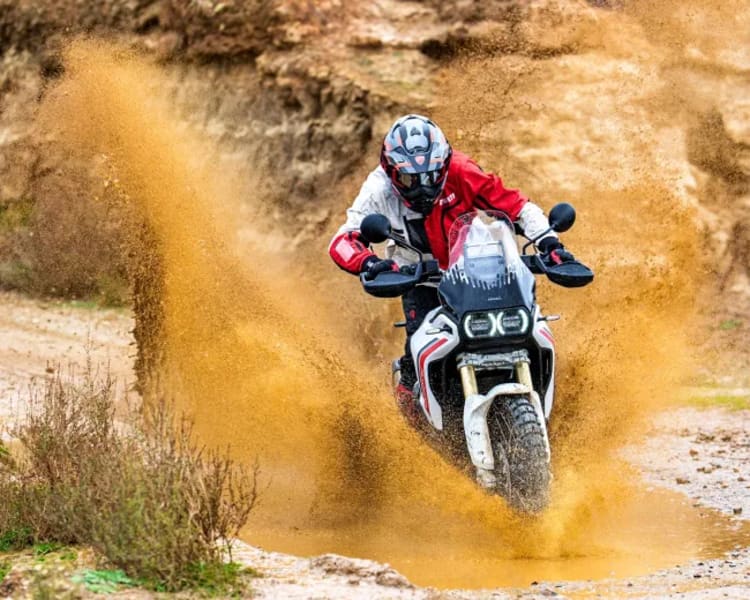
Image credit: Ducati
For a certain segment of Ducati faithful, that news landed like a punch. The Testastretta has history, character, and the kind of mechanical drama that enthusiasts talk about over cold beers long after the ride is done. Swapping it out felt, to some, like a step backward.
The numbers, though, tell a different story. The new 890cc V2 makes 110 horsepower at 9,000 rpm and 68 lb-ft of torque at 7,000 rpm. Those figures sit right in line with what the Testastretta was producing, so there is no meaningful loss of performance on paper. But what the new engine brings to the table beyond raw output is where the real case gets made.
Ducati describes this as one of the lightest twin-cylinder engines it has ever built. It features a variable intake valve timing system that spreads power across a wide range of engine speeds rather than concentrating it in a narrow band, which translates to a responsive, punchy feeling every time the throttle gets cracked open. The gearbox has been tuned specifically for the demands of adventure riding, with shorter ratios through the first four gears to help the bike claw over obstacles and a longer sixth gear to keep fuel consumption reasonable during highway stretches.
Then there is the maintenance picture, which for many owners may be the most compelling argument of all. The Testastretta required valve clearance adjustments at relatively short intervals and demanded periodic cam-belt changes — work that added up in both shop time and dollars. The new V2 pushes valve clearance checks out to approximately 28,000 miles and extends oil change intervals to around 9,300 miles. For someone who actually uses a bike like this — long rides, remote terrain, miles stacking up fast — that difference matters enormously over the life of the machine.
A Frame Built Around Purpose
The engine swap gets the headlines, but the DesertX V2 also arrives with a genuinely novel chassis setup that deserves its own attention. Ducati engineered a DesertX-specific monocoque frame that incorporates the engine as a load-bearing member and doubles as an airbox. It is an unconventional approach, and it pays dividends in two distinct ways.
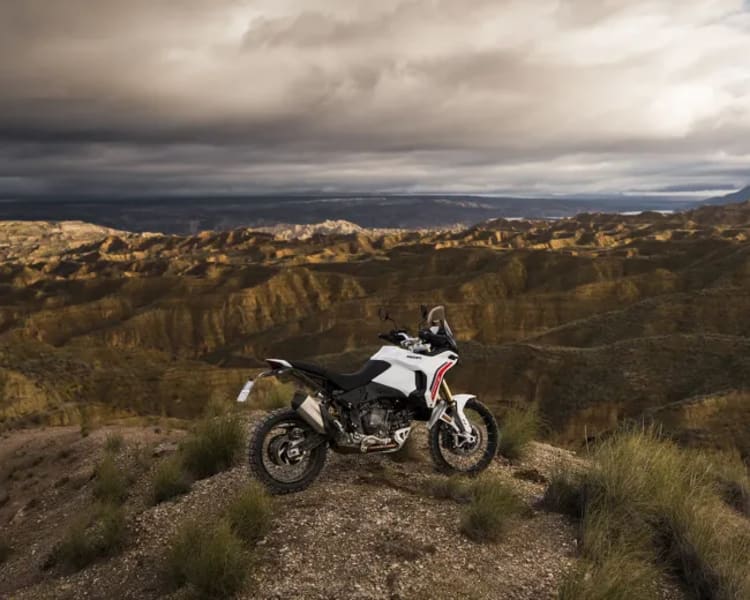
Image credit: Ducati
First, it increases the overall rigidity of the chassis, which makes the bike more responsive and predictable when the road disappears and things get rough. The handling becomes more intuitive because the structure is stiffer and more unified, translating rider inputs into actual movement with less flex and vagueness in between.
Second, it makes maintaining the air filter dramatically easier. Anyone who has ridden seriously off-road knows that the air filter needs attention after dusty or muddy sessions, and the easier that job is to do, the more likely it actually gets done. The monocoque design allows the filter to come out without a major disassembly exercise.
Toward the back of the bike, Ducati kept the trellis frame, which is a nod to the brand's heritage and gives access to engine components without the frustration that some modern adventure bikes impose on anyone trying to wrench on them in the field. The entire package — front monocoque, rear trellis — reflects an engineering philosophy that treats the long-distance, off-road rider as someone who actually has to live with the consequences of every design decision.
Suspension and Braking Get Serious
The DesertX was already a capable machine in the dirt, but the V2 raises that bar with meaningful upgrades to both ends of the suspension. Up front, a Kayaba fork has replaced the previous unit, bringing better capability over rough terrain and more confidence in the hands of riders who push into genuinely challenging riding conditions. At the rear, full-floater progressive linkages on the shock absorber deliver a compliance curve that is softer early in the compression stroke — soaking up small chatter and trail debris without beating the rider up — and progressively firmer as forces increase, providing support when it is truly needed.
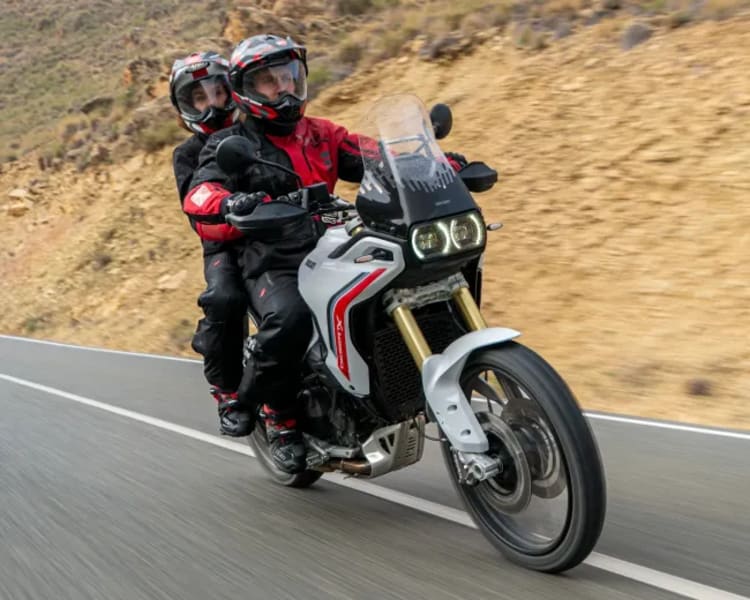
Image credit: Ducati
Brembo brakes handle stopping duty, which at this price point is exactly the right answer. Brembo has long been the benchmark in motorcycle braking, and having them on an adventure bike that may find itself descending steep, loose terrain adds a meaningful layer of confidence.
The Electronics Package
Modern adventure bikes live and die by their electronics suites, and Ducati has equipped the DesertX V2 with a package that reflects serious development time. A 6-axis inertial measurement platform sits at the core of the system, monitoring the bike's movement in every direction and feeding that data to the various control systems in real time.
Six ride modes give the rider meaningful options depending on conditions, from tight technical trails to open highway miles. Ducati Quick Shift 2.0 handles clutchless up and downshifts smoothly. The alphabet soup of rider aids includes Ducati Traction Control, Ducati Wheelie Control, and Engine Brake Control — each system tuned with input from riders and testers who specifically worked the bike in off-road environments.
The dashboard is a 5-inch TFT display that presents all of this information cleanly and legibly, important for a bike where the rider may be making quick decisions with gloves on in changing light conditions.
The honest summary of this electronics package is that it gives the rider every reasonable tool to stay upright and in control, leaving the actual riding skill as the remaining variable.
Price, Availability, and the Bottom Line
The DesertX V2 hits European dealerships first, followed by the United States market in May, with Australia and Japan coming in June. The base price in the US is $16,995.
That two thousand dollar reduction from the original launch price is not a trivial detail. It reflects what Ducati has achieved with the new engine and frame — a bike that costs less to build, less to own, and less to maintain, without giving up the performance or character that made the original DesertX worth caring about in the first place.
There is a version of this story where the DesertX V2 is a compromise, where Ducati trimmed costs by cutting corners and gave enthusiasts a watered-down version of what came before. The evidence does not support that story. What Ducati appears to have built is the bike the original DesertX was always trying to be: lighter, tighter, more maintainable, better equipped, and easier to live with across thousands of hard miles.
The riders who passed on the first generation waiting for Ducati to work out the details may have been more patient than they realized. The V2 looks like the version that earns the wait.


