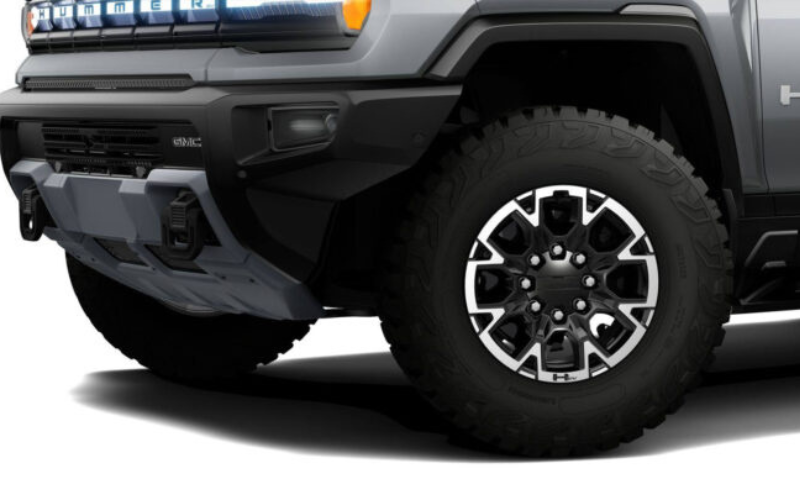
General Motors has made an under-the-radar change to one of its most capable electric vehicles. The 2026 GMC Hummer EV's Extreme Off-Road Package now comes with a completely different set of wheels than what drivers received just weeks ago.
The modification affects any Hummer EV built on or after January 23rd that includes the Extreme Off-Road Package, known internally by its RPO code Z6X. While the name of the wheels remains identical—18-inch Black aluminum wheels with machined accents—the actual design has been swapped out entirely.
The original wheels carried the RPO code RCS. These featured a chunkier, more substantial appearance with thicker spokes and minimal cutouts. The design philosophy behind them emphasized a heavy-duty, industrial aesthetic that matched the Hummer EV's aggressive off-road character. They looked like they meant business, with a visual weight that complemented the truck's imposing presence.
The replacement wheels, designated by RPO code RB9, take a markedly different approach. These new rollers showcase a more complex spoke arrangement with additional cutouts and sharper, more defined detailing throughout the design. The result is a wheel that appears lighter and more technical in its execution, trading some of that industrial heft for a more refined, intricate look.
For buyers who prefer the original blockier design, there's still a path forward. The RCS wheels remain available as a standalone option, though only for vehicles that already have the Z6X off-road package equipped. General Motors hasn't yet released pricing information for ordering these wheels separately.
The wheel change represents just one piece of the puzzle for the 2026 model year Hummer EV lineup. GMC has introduced several updates across the board, including the new Carbon Fiber Edition and the debut of King Crab mode, which allows the vehicle to move diagonally for enhanced maneuverability in tight off-road situations.
However, these improvements come with a price adjustment. GM recently implemented cost increases that affect every single configuration of the Hummer EV. The base manufacturer's suggested retail price climbed by $600, while the destination freight charge saw a $200 bump, rising from $2,495 to $2,695. When combined, buyers face an $800 total increase regardless of whether they choose the Pickup or SUV body style, and irrespective of which trim level or powertrain configuration they select.
Under the hood—or more accurately, under the floor—the powertrain options remain unchanged. The 2X trim levels continue using a dual-motor setup, providing substantial power and capability for most driving scenarios. Those who want maximum performance can step up to the 3X models, which deploy a three-motor configuration that unleashes the Hummer EV's full potential.
Battery technology stays consistent across the lineup as well. Every Hummer EV comes standard with a 20-module battery pack utilizing GM's proprietary battery technology. For those who need extended range, the 3X Pickup offers an optional upgrade to a 24-module pack, allowing for longer adventures between charging stops.
The foundation supporting all of this capability is GM's BT1 platform, a dedicated electric vehicle architecture designed to handle the unique demands of battery-electric powertrains. Assembly takes place at GM Factory Zero in Michigan, a facility that has been retooled specifically for electric vehicle production.
The timing of this wheel change is interesting. Making a design modification this specific partway through a model year suggests either a supply chain adjustment or a deliberate decision to refine the vehicle's appearance. Whatever the reasoning behind the switch, buyers taking delivery of new Hummer EVs with the Extreme Off-Road Package will now find themselves with a noticeably different wheel design than those who purchased just a few weeks earlier.
For potential buyers considering the Extreme Off-Road Package, the change adds another layer to the decision-making process. The new RB9 wheels might appeal to those who appreciate more intricate design work and a slightly more sophisticated appearance. On the other hand, traditionalists who value the Hummer EV's rugged image might find themselves drawn to the option of adding the original RCS wheels back onto their build.
The Hummer EV has carved out a unique position in the electric vehicle market since its introduction. It offers genuine off-road capability combined with electric powertrain technology, wrapped in styling that pays homage to the original Hummer brand while looking decidedly modern. Small changes like this wheel redesign show that General Motors continues refining the vehicle even as production continues.
As the electric truck and SUV segment grows increasingly competitive, these details matter. While a wheel design might seem like a minor component, it contributes to the overall character and visual impact of the vehicle. The fact that GM is making these adjustments demonstrates ongoing attention to the product, even if the changes don't always make headlines.
The price increases across the Hummer EV lineup reflect broader industry trends as automakers adjust to market conditions and production costs. An $800 increase on a vehicle with a six-figure starting price represents a relatively modest percentage increase, though it's notable that GM chose to implement it across every configuration rather than targeting specific trim levels.
Production at Factory Zero continues, and the facility represents a significant investment in GM's electric vehicle future. The plant's transformation from internal combustion engine production to dedicated EV manufacturing symbolizes the broader shift happening throughout the automotive industry.
For now, buyers interested in the 2026 GMC Hummer EV will receive the new RB9 wheels when ordering the Extreme Off-Road Package, with the option to swap back to the RCS design if they prefer the original look. As deliveries continue and more vehicles hit the streets, it will become clear whether drivers appreciate the more technical appearance of the new design or prefer the heavier, industrial character of the wheels they replaced.


