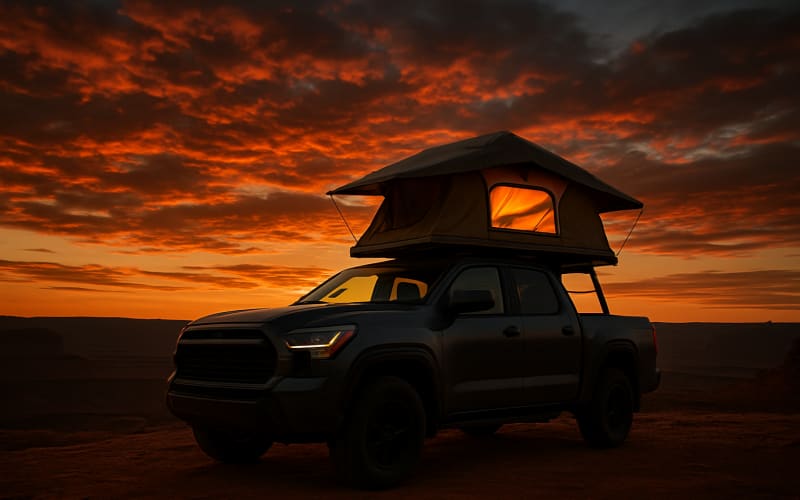
There was a time when overlanding meant a cooler in the truck bed, a sleeping bag on the ground, and a whole lot of figuring it out as you went. That era is fading fast. What's taken its place is something closer to a movement — one built around trucks, SUVs, purpose-built gear, and a growing demand for shelter that works as hard as the people using it.
At the center of that shift sits the automatic hardshell rooftop tent. And in 2026, the conversation around this category of gear has never been louder.
More Than a Camping Trend
Overlanding has quietly grown from a subculture into something the broader outdoor industry can no longer ignore. Pickup trucks and SUVs are being outfitted not just for weekend trips but for weeks-long expeditions — remote work, extended road travel, multi-state routes that push deep into terrain where conventional lodging doesn't exist and ground camping feels like an unnecessary gamble.
The global market for overlanding and outdoor mobility equipment has expanded significantly over the past several years. Experiential travel has pushed people toward setups that make their vehicles function as full mobile bases. That means rooftop tents, portable kitchens, modular furniture, onboard electrical systems, and everything in between. Retailers, rental fleets, and tour operators have all taken notice, with commercial demand growing alongside individual consumer interest.
Within that broader category, rooftop tents — particularly automatic hardshell models — have become one of the most talked-about pieces of kit in the space. The reasons aren't complicated.
Why Speed Matters More Than You'd Think
Ask anyone who has pulled into a campsite at nine o'clock at night in the rain why setup time matters, and you'll get a very clear answer. Overlanders frequently arrive at their destinations late, exhausted, and under conditions that don't cooperate. The last thing anyone wants to do after eight hours behind the wheel is wrestle with poles, stake out a footprint, and figure out why the rainfly isn't cooperating.
Automatic rooftop tents address this directly. The design eliminates the manual assembly process entirely, allowing the shelter to be deployed with minimal physical effort in a fraction of the time. You pull up, you open the tent, you're done. That simplicity has real value, especially for travelers who cover serious miles.
The elevation factor matters too. A rooftop setup keeps you off the ground, which means staying clear of moisture, insects, uneven terrain, and the various things that can make ground-level sleeping uncomfortable or problematic. For anyone spending extended time in the backcountry, that's not a luxury — it's a practical advantage.
Hardshell vs. Softshell: Understanding the Difference
Not all rooftop tents are built the same way. Softshell models fold out using fabric walls and poles, and while they tend to be lighter and more affordable, they also demand more from the person setting them up. In heavy weather, a fabric-walled shelter under a soft exterior shell offers meaningful but limited protection.
Hardshell designs flip that equation. The tent folds into a rigid composite shell — aerodynamically shaped, sealed against the elements, and capable of handling conditions that would stress a fabric unit. When the lid opens, the sleeping space is already established. No assembly. No guesswork.
The tradeoff is weight and cost, and for many overlanders those are acceptable tradeoffs given what they get in return. Reinforced aluminum structures, corrosion-resistant hardware, waterproof materials rated for repeated outdoor exposure — these aren't features you find in entry-level camping gear, and they're not meant to be.
What Wild Land Brings to the Table
Wild Land has been operating in the vehicle-camping equipment space for more than 17 years, with a focus on rooftop tents and related outdoor systems. The company's development work has centered around the intersection of structural durability, vehicle compatibility, and real-world usability — not just gear that looks good in a product photo but equipment that holds up over time in genuine outdoor conditions.
Their 2026 Series represents what the company describes as a new benchmark in the category, built around instant deployment, superior weather resistance, and what they call expedition-grade reliability. The series incorporates aerodynamic shell structures, reinforced materials, and the kind of automated opening mechanisms that define the modern automatic hardshell segment. The framing behind the product is straightforward: speed and durability shouldn't require a compromise, and for serious overlanders, they no longer have to.
Wild Land also holds a patent on its COLLAPSIBLE TENT FRAME system — a structural design developed specifically to improve folding stability and storage efficiency. That kind of proprietary engineering detail speaks to the level of product development investment the company has made in the category, going beyond assembly and into the underlying mechanics of how these tents actually function over years of use.
Certifications That Mean Something in the Field
The overlanding gear market has matured enough that buyers are starting to look more carefully at the companies behind the products — not just the specs on the product page. Factory audits and certifications have become part of how serious buyers evaluate suppliers, particularly when they're making significant investments in vehicle-mounted equipment they'll rely on in remote locations.
Wild Land has completed the Costco GMP General Hardlines Factory Assessment, which evaluates manufacturing processes, operational management, and supply chain practices. The company also carries ISO certification, has completed a BSCI audit covering labor standards and supply-chain responsibility, and has undergone GMP Factory Audit review of production and quality management practices.
These aren't just paper credentials. In an industry where build quality directly affects safety and performance in the field, the manufacturing process behind a product matters. A tent that fails its seams at elevation in a storm isn't just inconvenient — it's a problem with real consequences.
Beyond certifications, Wild Land has appeared at several major international exhibitions including the Canton Fair in Guangzhou, OutDoor by ISPO in Munich, the SEMA Show in Las Vegas, and OVERLAND EXPO, which focuses specifically on overlanding vehicles and equipment. Presence at those events reflects a company that is actively engaged with the professional and consumer overlanding communities rather than operating on the margins of the space.
The WINGMAN X: A Different Kind of Solution
Not every overlander wants a rooftop tent. Some truck owners are looking for something that uses the bed space more deliberately, and Wild Land's WINGMAN X is designed with that in mind.
The system is built specifically for pickup trucks, using a vertically expanding structure that provides an enclosed space when deployed while keeping a compact, travel-ready profile on the road. Crucially, it installs without permanent modifications to the vehicle body — a significant selling point for anyone who doesn't want to commit to irreversible changes to their truck.
Once deployed, the WINGMAN X integrates lifting mechanisms, interior lighting, and onboard electrical systems to support vehicle-based camping without sacrificing the cargo utility that makes a truck useful in the first place. It represents the kind of product experimentation happening across the overlanding industry right now as manufacturers explore new ways to bridge the gap between work vehicle and mobile living platform.
The Broader Picture: Where Overlanding Equipment Is Heading
The direction of travel in this industry is clear. Automation, lightweight materials, and modular design are all accelerating. The overlanding consumer has become more sophisticated, and manufacturers are responding in kind. Systems that used to require significant setup time and expertise are being engineered for speed and simplicity without giving up structural performance.
Environmental considerations are also playing a growing role in product development. Longer-lasting designs and more durable materials reduce the cycle of replacement that generates waste. A well-built hardshell rooftop tent that lasts a decade is, from a sustainability perspective, a better outcome than three cheaper units that each last three years. That kind of thinking is increasingly visible in how the better manufacturers approach product development.
Commercial interest in vehicle-mounted camping systems is also growing. Adventure rental fleets and outdoor tour operators have different requirements than individual consumers — they need gear that can handle heavier use cycles and still perform reliably. That commercial demand is pushing manufacturers toward even higher durability standards, which ultimately benefits the individual buyer as well.
What It All Adds Up To
The modern overlander isn't the same person who was sleeping in the truck bed with a foam pad ten years ago. Today's version of this lifestyle involves real infrastructure — equipment engineered with the same seriousness as any other performance gear, backed by certifications that verify how it's made, and designed to handle the full range of what extended vehicle travel actually demands.
Automatic hardshell rooftop tents sit at the center of that evolution. They represent the convergence of everything the overlanding market has been moving toward: fast deployment, serious weather protection, structural durability, and the kind of reliability that lets you stop thinking about your shelter and start focusing on where you're going.
Wild Land's 2026 Series, along with systems like the WINGMAN X, reflects where that development has arrived. After 17 years in the space and a product line that spans rooftop tents, vehicle-mounted shelters, camping furniture, portable lighting, and integrated outdoor kitchens, the company is operating at the serious end of a market that has grown up considerably.
The overlanding world has come a long way from a cooler and a sleeping bag. And for anyone who has spent real time in the field, that progress is easy to appreciate.


